In cima alla collina, non lontano dal grande arco di marmo e dai centri commerciali, la strada si piegava a sinistra, e di nuovo in discesa, e c’era un incrocio con un’altra strada – una stretta, in discesa ma dall’altra parte , ad ovest della città e della città residenziale. Quindi, quella collina era in realtà la più alta di tutta la città, e lì – tra i palazzi e le porte ad arco costruite nello stile del primo Settecento – con i loro cancelli di ferro neri e alti e le grandi lampade che ricordavano le lampade a gas del passato, proprio all’ingresso di Palazzo Ducale, c’era una fontana. Era un monumento, un anello d’acqua; l’acqua scintillava dal livello del suolo, saliva a tre metri e poi cadeva, in un gioco di luce. Studenti e persone erano seduti davanti alla fontana, sui gradini di pietra di Palazzo Ducale; guardare l’acqua, chattare e scattare foto. Dal cancello principale, avresti camminato all’interno, fino alle gallerie d’arte, o giù per un’altra scala di pietra nelle vicinanze, fino all’ingresso laterale.
Laura entrò, attratta dalle pacifiche sale e dalle ombre fresche.
Dopo il lavoro, è stato meraviglioso passeggiare per la città, nel caldissimo tramonto, senza fretta. Dopo la lunga camminata, ora faceva caldo, e desiderava quella freschezza. Guardò la mostra d’arte pubblicizzata – l’arte moderna, di qualche tipo, dalla Germania, e qualcos’altro da Renzo Piano, l’architetto … tutto ciò era interessante per lei, ma non in quel momento. Voleva che la sua mente fosse completamente libera e si rilassasse, dimenticasse tutto, non immergersi in alcuna considerazione dell’arte moderna sulla Sfera di Renzo Piano nel porto o in qualsiasi prospettiva architettonica. Quindi prese la scala laterale e si fermò per un cappuccino al caffè di Palazzo. Cappuccino lungo e dolce, con gelato alla vaniglia e panna … il miglior momento della sua giornata.
Poi, dopo essersi seduto per un po ‘al bar a guardare le persone, pagò il Cappuccino e andò a camminare in discesa, dalla piazza della fontana, verso il porto. Passarono altri dieci minuti, lo sapeva già dal giorno prima – sul vecchio marciapiede della città, vicino agli stretti vicoli del ghetto ebraico – lasciando il Palazzo Ducale sulla destra. I piccoli negozi stavano chiudendo, i bar di musica si stavano aprendo. Un giovane mendicante stava vendendo vecchi libri ai passerbys, una donna stava incombendo sull’angolo del vicolo. Contrasti di luce e oscurità, di poveri e ricchi – bianco e nero, come il marmo sulla facciata della chiesa. La chiesa – il Duomo, così Laura fu raccontata da Maurizio in precedenza in ufficio, quando stava chiedendo della città – fu risparmiata dal bombardamento della Seconda Guerra Mondiale con una specie di miracolo. Una pesante bomba di un bombardiere alleato aveva colpito il campanile nel 1944, facendo crollare parte delle mura dalla forza dell’impatto; ma la campana stessa era rimasta ferma – come se fosse stata fissata al cielo – e la bomba non esplose, per essere poi recuperata e disarmata, da volontari coraggiosi.
Ora che il sole stava tramontando. Non era più così caldo; sentì la brezza del mare sulla sua pelle, e rabbrividì per un momento, avvolgendosi nuovamente nello sgabello. Il cambio della stagione, da Inverno a Primavera, significava sole caldo a pranzo e nel pomeriggio, a Genova; e freddo di notte.
Laura si fermò davanti a una vetrina, guardandosi dentro. Le piacevano i colori. Quella non era una primavera con i colori però, non ancora almeno … la maggior parte della moda era su gonne blu e nere, o forse marrone. E leggings, anche per la primavera, tutti i leggings di quell’anno. Ma quel vestito nel negozio era bello. Stivali al ginocchio in tonalità marrone chiaro, quasi sabbia, in tessuto di velluto e fibbia alla caviglia. Tacchi quadrati, stretti in basso ma non troppo, e una striscia di pelle più scura appena sotto il ginocchio, chiusa sul retro da un’altra bella fibbia. E una gonna – un po ‘corta, ma non troppo, e comunque, i leggings avrebbero permesso di vestirla anche sul lavoro, senza essere troppo audace … – e una giacca con gli stessi colori, indossata sopra una camicetta di seta verde sul manichino. La moda italiana … così bella.
E il prezzo è così alto.
La prossima volta. In questo momento stava risparmiando per una nuova auto – nessuna moda italiana per l’anno. Un peccato. Forse, comunque … meglio andarsene – sapeva dei suoi impulsi e del modo in cui lasciavano il suo conto in banca piangendo.
Si voltò improvvisamente e scese.
L’uomo con l’ombrello lo chiuse e andò alla porta di un negozio, armeggiando con la maniglia e lasciando cadere la rivista che stava tenendo in mano. Il negozio era chiuso. La rivista cadde in una pozza d’acqua, ma l’uomo la lasciò lì, senza lamentarsi, e se ne andò.
Strano.
“Non l’ha notato?”
Pensava che l’uomo avesse una faccia conosciuta; ma lei non riusciva a ricordare. Forse qualcuno dal lavoro; o dall’hotel.
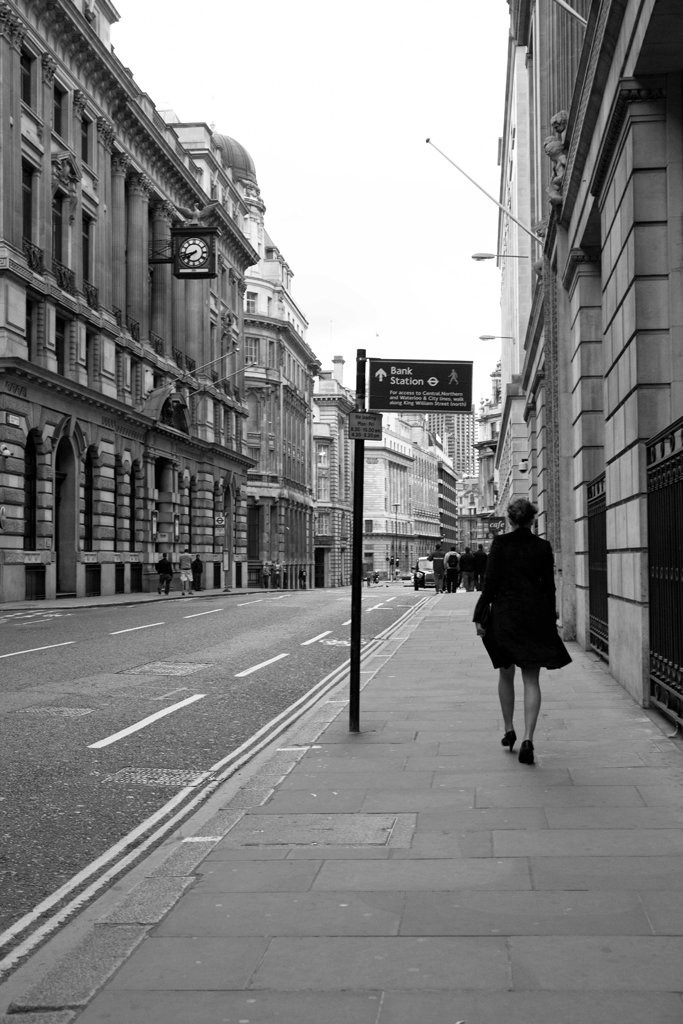
Ora pioveva, leggermente; l’hotel non era troppo lontano, una quindicina di minuti, eppure non si sentiva troppo felice all’idea di camminare sotto quella pioggia per più tempo. Laura cercò un taxi; nessuno era disponibile lì, ovviamente – Era una zona senza traffico. La strada era ampia e senza riparo dalla pioggia, ma i vicoli avevano archi e erano coperti, così girò uno di quei vicoli. Non era certo la parte migliore della città, lo capì subito. Quel vicolo non era pulito, le porte delle case non erano ben tenute, e c’erano … beh c’erano piccole stanze al livello della strada, con un piccolo ingresso e una specie di finestra da cui poteva vedere un piccolo letto gemello e alcune decorazioni Con un segno “libero” o “occupato” in quella finestra. Le donne bramavano gli ingressi, alcuni erano chiusi. Capì immediatamente che quelle stanze erano, e passando accanto si costrinse a mantenere un’espressione indifferente. Non che il pensiero su ciò che aveva appena visto fosse sorprendente, o troppo strano – era ovunque, in tutte le città … non una sorpresa per nessuno, no – ma non immaginava che avrebbe trovato delle stanze pubbliche aperte in strada livello, in una città del genere, a pochi passi dalla chiesa. I passi delle persone che camminavano lungo il vicolo dietro di lei echeggiavano rumorosamente – il vicolo era stretto ora, e gli edifici del Ghetto erano alti e vicini l’uno all’altro. Quell’eco la rendeva nervosa; per un momento, pensò di tornare sulla strada principale, non badando più alla pioggia, ma ora era più fuori dal vicolo che in – così lei andò più veloce. Quasi fuori, l’uscita era lì, e Laura poteva già vedere le barche a vela e la piazza nella parte anteriore del mare. ‘Farinata di ceci per cena’. Era quello che desiderava. Davanti all’uscita del vicolo, qualcuno l’afferrò per un braccio. Ad un tratto; tirandola nell’ombra, e inaspettatamente.
[…]
At the top of the hill, not far from the great marble arch and the shopping malls, the road bent left, and downhill again, and there was a traffic junction with another street – a narrow one, going downhill too but from the other side, to the west of the city and the residential town. So, that hill was actually the highest of the whole city, and there – between the palaces and the arched gateways built in the early Eighteenth Century style – with their black and tall iron gates, and the big lamps that resembled the gaslight lamps of the past, just at the front entrance of Palazzo Ducale, there was a fountain. It was a monument, a ring of water; water was sparkling from ground level, going three meters high, and then falling down, in a game of light. Students and people were sitting in front of the fountain, on the stone steps of Palazzo Ducale; looking at the water, chatting and taking pictures. From the front gate, you would walk inside, to the art galleries, or down to another stone staircase nearby, to the side entrance.
Laura went in, attracted by the peaceful halls, and the fresh shadows.
After work, it had been wonderful to stroll by the city, in the warm sunset, without any hurry. After the long walk, it was hot now, however, and she longed for that freshness. She looked at the advertised art exhibition – modern art, of some kind, from Germany, and something else from Renzo Piano, the architect … everything of that was interesting for her, but not in that moment. She wanted her mind to be completely free and just relax, to forget everything, not to immerse into any modern art consideration about the Sphere of Renzo Piano in the harbour or any architetural perspective. So she took the side staircase, and stopped for a Cappuccino at Palazzo’s cafè. Long and sweet Cappuccino, with vanilla ice cream, and panna … the best moment of her day.
Then, after sitting for a while in the cafè looking at people, she paid the Cappuccino, and went walking downhill, from the square of the fountain, towards the harbour. It was another ten minutes walk, she knew already from the day before – on the old pavement of the city, near the narrow alleys of the jewish Ghetto – leaving the Palazzo Ducale on the right. Small shops were closing down, music bars were opening up. A young beggar was selling old books to the passerbys, a woman was looming on the alley corner. Contrasts of light and darkness, of poor and rich – black and white, as the marble on the facade of the church. The church – the Duomo, so Laura was told by Maurizio earlier at the office, when she was asking about the city – was spared from the bombing of the World War Two by some kind of miracle. An heavy bomb from an Allied bomber had hit the bell tower in 1944, causing part of the walls to crumble down by the force of the impact; but the bell itself had remained steady – like it had been fixed to the sky – and the bomb didn’t explode, to be recovered and disarmed later, by courageous volunteers.
Now that the sun was setting down. It was not so warm anymore; she felt the breeze from the sea on her skin, and she shivered for a moment, wrapping herself up again in her stool. Changing of the season, from Winter to Spring, meant warm sun at lunch time and in the afternoon, in Genova; and cold at night.
Laura stopped by a shop window, looking inside. She liked colors. That wasn’t a Spring with colors though, not yet at least … most of the fashion was on blue and black, or maybe brown skirts. And leggings, for the Spring too, all leggings that year. But that dress in the shop was a nice one. Knee-high boots in light brown, almost sandy tone, in some velvet fabric, and with a buckle at the ankle. Square heels, narrowing at the bottom but not too much, and a stripe of darker leather just under the knee, closed at the rear by another nice buckle. And a skirt – a bit short, but not too much, and anyway, leggings would allow to dress it at work too, without being too daring … – and a jacket in the same colors, worn over a green silk blouse on the mannequin. Italian fashion … so nice.
And price so high.
Next time. Right now she was saving up for a new car – no Italian fashion for the year. A pity. Maybe, anyway … better to walk away – she knew about her impulses, and the way they left her bank account crying.
She turned, suddenly, and walked down.
The man with the umbrella closed it, and went to a shop door, fumbling with the handle and dropping the magazine he was carrying in hand. The shop was closed. The magazine fell into a water puddle, but the man left it there, without complain, and went away.
Strange.
‘Didn’t he notice?’
She thought that the man had a known face; but she couldn’t remember. Maybe someone from work; or from the hotel.
Now it was raining, lightly; the hotel was not too far, fifteen minutes or so, yet she wasn’t feeling too happy at the idea to walk under that rain for more time. Laura looked for a taxi; none was available there, of course – it was a no-traffic area. The avenue was broad and with no shelter from the rain, but the alleys had arches and were covered, so she turned down one of those alleys.
It was not the best part of the town for sure, she realized it at once. Those alley weren’t clean, doors to the houses were not well maintained, and there were … well there were small rooms at the street level, with a small entrance and kind of a window from which she could see a small twin bed and some decorations. With a ‘free’ or ‘busy’ sign on that window. Women were longing on the entrances, some was closed. She realized immediately what those rooms were, and passing by she forced herself to keep an indifferent expression. Not that the thought about what she had just seen was surprising, or too weird – it was everywhere, in all cities … not a surprise for anyone, no – but she didn’t imagine that she would found open public rooms at street level, in such a city, at few steps from the church.
Footsteps of the people that was walking down the alley behind her echoed loudly – the alley was narrow now, and the buildings of the Ghetto were tall and close one to another. That echo made her nervous; for a moment, she thought about turning back to the main road, not minding the rain anymore, but she was now more out of the alley than in – so she just go faster. Almost out, the exit was there, and Laura could see the sailing boats and the square in the front of the sea already. ‘Farinata di ceci for dinner’ . That was she desired.
Right before the alley exit, someone grabbed her arm. Suddenly; pulling her in the shadows, and unexpectedly.